Supply Chain 2.0 Is Here, and Forecasting Is at Its Core

The way supply chains operate is changing fundamentally. In a major new blog post published March 24th 2026, Microsoft laid out its vision for what it calls Supply Chain 2.0, an era defined by AI-powered simulations, autonomous agents, and physical AI working together across logistics networks worldwide.

At the heart of this transformation sits a challenge that every manufacturer, retailer, and energy company knows all too well: getting the forecast right.

We’re proud that Microsoft recognizes prognotix as a key partner in this space, highlighting our AI-powered Forecasting Platform as a solution that enables supply chain experts to generate and optimize highly accurate demand forecasts, directly within their own Azure environment.

Microsoft’s article paints a vivid picture of where supply chains are heading. From digital twins of entire warehouses to humanoid robots sorting packages at conveyor belt speeds, the ambitions are enormous. But none of these innovations deliver their full potential without one foundational capability: knowing what demand looks like tomorrow, next month, and next quarter.

Simulations need demand scenarios to test against. AI agents need forecast baselines to optimize around. Robotics need volume predictions to plan capacity. Forecasting isn’t just one piece of the puzzle, it’s the piece that makes all the others work.

And yet, in many organizations, forecasting still happens in Excel spreadsheets, managed manually by planners who spend the majority of their time reconciling data rather than making strategic decisions.


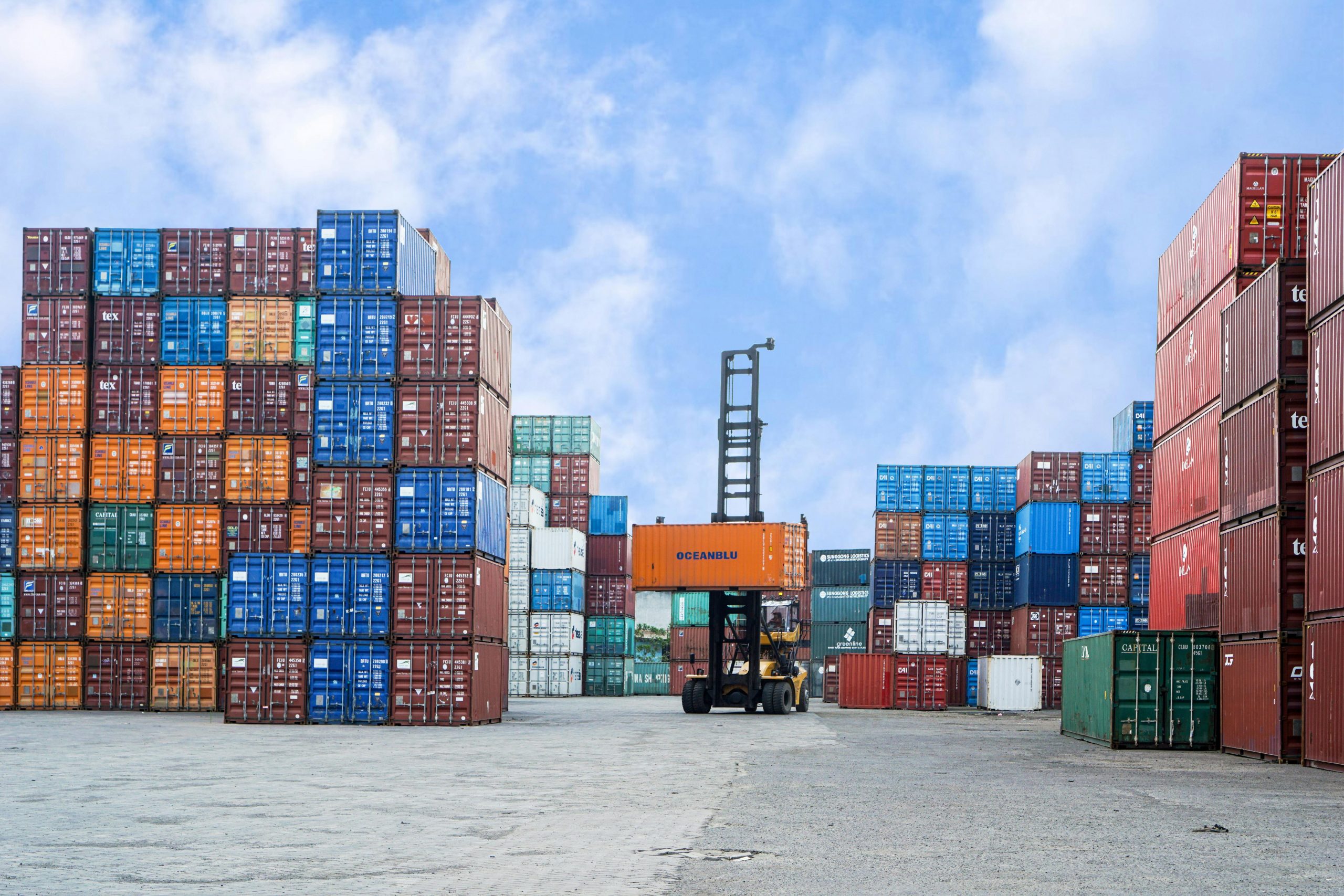
Stacks of colorful shipping containers at a busy port yard with a container handler lifting an orange container under a blue sky
Photo by Aan Amrin @ Pexels.com
Large container ship loaded with stacked shipping containers beneath towering blue gantry cranes labeled "Abidjan Terminal."
Photo by Jean Marc Bonnel @ Pexels.com

Why Forecasting Matters More Than Ever

This is exactly the gap prognotix was built to close. Our platform puts planners in control of the entire forecasting process, from data ingestion to model selection to scenario analysis, without requiring data science teams or lengthy IT projects.

With over 70 AI and machine learning models, the platform automatically identifies the best-fitting approach for each individual time series. It runs natively inside the customer’s Azure tenant, ensuring full data sovereignty and compliance. And it’s designed for speed: teams can go from raw data to production-ready forecasts in days, not months.

As Microsoft noted in their article, prognotix is available on the Microsoft Marketplace, making it straightforward for enterprises already working within the Azure ecosystem to get started.

One of the most compelling parts of Microsoft’s blog is their own transformation story. Microsoft operates one of the world’s largest cloud supply chains, spanning more than 70 Azure regions and over 400 datacenters and has deployed more than 25 AI agents internally, with a goal of reaching 100 by the end of 2026.

Their journey from Excel-based reporting to an autonomous, agentic supply chain mirrors what we see with our own customers every day. The pattern is remarkably consistent: organizations start by unifying their data, then layer in AI-powered forecasting to replace manual processes and gradually expand to more use cases and business units.

The difference between companies that succeed and those that stall? They start with forecasting they can trust and they put it in the hands of the people who know the business best.

In Conversation with Volker Strasser, Microsoft

We’ve had the privilege of collaborating closely with Volker Strasser, Industry Advisor at Microsoft, who co-authored the Supply Chain 2.0 blog post. We asked him about where the industry is heading, how forecasting fits into the bigger picture, and what Microsoft’s integration strategy means for organizations getting started.

“Volker, the blog describes a shift from reactive supply chains to autonomous, agentic ones. Where does demand forecasting fit in that journey?”

Demand forecasting is a main component in that journey. If your accuracy improves, you save significant cost and gain speed across the entire end-to-end supply chain. Take a simple example: if your forecast models save you three containers that you don’t have to ship, that’s three containers you don’t have to put on a vessel. The cost savings are immediate and tangible and that’s just one small example of the downstream impact.

— Volker Strasser, Industry Advisor, Microsoft

“The article highlights the importance of data unification. How critical is it that forecasting tools integrate with existing enterprise systems rather than creating new silos?”

It’s crucial. When you forecast, you create a plan, but the moment that plan hits reality, it changes. You need to run simulations, make decisions, adapt. If you have a compact and clear data foundation, you get better results in planning, in simulation, and in execution. You can exchange data across these stages and generate deeper insights. With siloed data, you get siloed decisions. With a broad, common ground, your decisions improve and that directly translates into business KPIs.

— Volker Strasser, Industry Advisor, Microsoft

“How does prognotix’s integration-first approach — connecting to Microsoft Fabric, Dynamics 365, and Power BI — relfect Microsoft’s strategy for the supply chain stack?”

If you try to build a data foundation that is perfect and fully aligned with everything from the start, it takes you ten years and you get nothing. You have to strike a balance. Horizontally, you need to think about your data foundation. Vertically, you need to focus on where you can achieve real wins in specific areas. Start with planning and forecasting, build the data foundation for that scenario, and then reuse it in the next phases for simulation and execution. That is also the strategy of Microsoft: with Fabric underneath, you connect all data from all systems, build data products on top, and feed them into AI and applications. You don’t have to do everything at once. You go step by step, but you always keep the big picture in perspective, focusing on vertical implementations that deliver direct business impact while building the horizontal foundation that serves all your needs over time.

— Volker Strasser, Industry Advisor, Microsoft

“Looking ahead, what role do you see AI-driven forecasting playing as supply chains become more agentic and autonomous?”

I think it’s one of the most important roles. You are forecasting resources, materials, containers, trucks, ships, airplanes, warehouse space. If you get this as precise as possible, it has a compounding effect on the rest of the supply chain, from warehousing to every kind of resource allocation. Think about building a house: if you do the planning correctly, the house looks exactly how you planned it. If the planning is a little bit fuzzy, the house could look fuzzy too. Forecasting is the major entrance point in the supply chain to get to real business impact, to your cash flow, your EBIT, your profit.

— Volker Strasser, Industry Advisor, Microsoft

Stacked red, blue, yellow and white shipping containers at a port with a large white-and-red gantry crane lifting a blue container against a clear blue sky
Frans van Heerden @ Pexels.com

What This Means for Your Organization

The vision Microsoft lays out in Supply Chain 2.0 isn’t science fiction, it’s already happening at companies like CSX Transportation, Dow Chemical, and Krones. And while the full agentic supply chain may take years to mature, the first step is available right now: replacing manual, inconsistent forecasting with AI-powered precision.

As Volker puts it, you don’t have to do everything at once. Start with forecasting, build a solid data foundation for that use case, prove the business impact and expand from there. That’s exactly the journey prognotix is built for.

If your planners are still spending most of their time wrestling with spreadsheets instead of steering the business, this is the moment to change that.


Read the full Microsoft blog post: Supply Chain 2.0: How Microsoft is powering simulations, AI agents, and physical AIhttps://www.microsoft.com/en-us/industry/blog/?p=125361