
Planning Ahead: Inside TGW Logistics Forecasting Pilot

For a company that builds large highly-automated logistics systems, the next two quarters are rarely the problem. Alexander Stuntner, Head of Supply Chain Management at TGW Logistics, can tell you with real confidence what the coming five to eight months hold. As a general contractor that manufactures its own components, TGW Logistics resolves each customer project down to a parts-level bill of materials, so the near-term plan is usually clear.

The trouble starts further out. Ask what the factory’s workload looks like in month eleven, twelve, or fifteen, and the picture thins out. Not because the work won’t be there, but because the projects that will fill those months haven’t been won, specified, or entered into the system yet.

This is one of the most common and least discussed problems in industrial planning. We recently ran a forecasting pilot with Alex and his team to take it on. The honest story of how it went is more useful than a polished success headline and it’s exactly the story he agreed to tell.


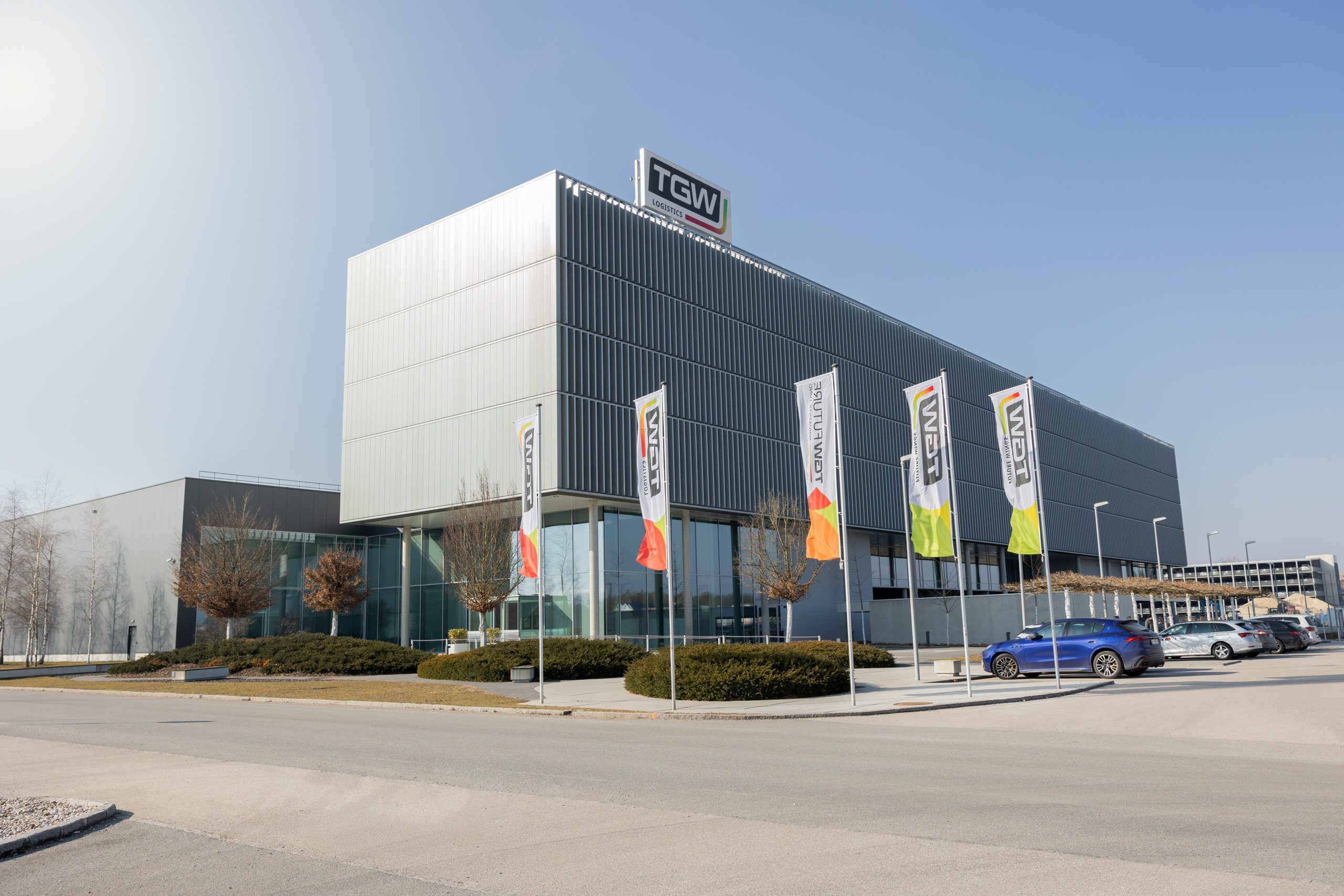
TGW Logistics Headquarter - Photo Credit: TGW Logistics

When the Forecast Falls Off a Cliff

TGW Logistics had built its planning on solid input data: a rolling view derived from live project information, refreshed continuously as sales and engineering refine each order. For the near term, that view is excellent.

But input data can only describe what already exists. When a controller building the next budget needs to look fifteen months ahead, or when leadership asks where utilization will land in a year, the actuals simply run out. The result is a forecast that appears to drop toward zero somewhere around month fourteen to sixteen, a curve that everyone in the room knows is wrong. Those months won’t be empty. They’ll fill with projects TGW Logistics hasn’t booked yet.

For Alex, closing that gap wasn’t a nice-to-have. His team’s vision is a single, trusted forecast. One number that the entire company, including cost-center and budget planning, can build on. Reaching it meant moving beyond input and actuals to a genuine forward projection across thousands of data points. That’s more than a spreadsheet can carry, which is what brought TGW Logistics to prognotix.

Starting Simple, On Purpose

Early on, they tried following every individual project through its lifecycle and quickly found the data too heterogeneous to learn from. They couldn’t see the forest for the trees. So they reversed course and deliberately scoped the pilot down to one clear, traceable signal: pre-assembly hours per period, drawn from the same aggregated data their current planning already relied on. Every two weeks, fresh figures fed a rolling forecast.

That decision reflected a principle Alex kept returning to: whatever the platform produced, his team had to be able to follow the reasoning. A forecast you can’t explain is a forecast you can’t defend to a controller or trust in a budget.

The data connection stayed pragmatic, too. prognotix supports automated, API-based integration, but for a pilot that makes little sense before you even know which data matters. TGW Logistics worked from CSV and Excel exports they were already producing, refining the right level of detail in a joint workshop with our team. As Alex put it plainly, it was an Excel exercise and that was exactly right for a proof of concept.

One early obstacle could have stalled everything: internal IT couldn’t commit hosting capacity within the defined time-frame of the PoC. Rather than let that become a project risk, we ran the proof of concept on the prognotix environment. It kept the team in a “safe enough to try” mode and let them start immediately. Production deployment can follow later as a managed application on Microsoft Azure, running inside TGW Logistics own tenant, a contained, one-time setup with low ongoing maintenance, and no data leaving the customer’s control.


TGW Logistics Warehouse for Puma - Photo Credit: TGW Logistics

What the Pilot Actually Delivered

Here’s where the story turns from what you’d expect. The first results didn’t behave the way anyone had planned.

Between the early demo and the live pilot, TGW Logistics order intake surged. The trend that had looked clean and near-linear suddenly bent upward, and the model now had to reconcile a fast-rising future against a very short history. The team had only begun systematically storing forward-looking full-data-snapshots in mid-2024, which left painfully few comparison points in exactly the months that matter most, months ten, eleven, and twelve. Add too little additive context, and a forecast can be led down a false trail, producing a future that matches neither the past nor anything recognizable.

Two capabilities turned that from a dead end into a learning engine.

First, the platform scores the quality of the data going in. Instead of guessing, the team got immediate feedback on whether a given dataset was actually fit to forecast and could adjust before chasing a bad result.

Second, prognotix always runs a broad range of models side by side, from established statistical methods to newer approaches, and compares them automatically. That comparison made it possible to see at a glance whether a result was meaningful or essentially a random walk. Not every dataset suits every model, and being able to tell the difference quickly changed how the team worked.

From there, it became iterative in the best sense. They tried distinguishing data from the uncertain sales phase versus the firmer realization phase. They tested forecasting at the product-line level instead of the aggregated assembly level, where too few data points were starving the model. Crucially, they kept the same granular input set throughout and documented every change, because, as the team learned, how you shape the data directly shapes the result.

The most valuable outcome wasn't a finished forecast. It was clarity.

After years of working with these inputs every two weeks, Alex’s team uncovered genuinely new insights into what drives their numbers and a clear-eyed view of where their data was strong and where it fell short.

That clarity has already produced action: they’ve automated their actuals-based export into Databricks, and they’re now building forecasting maturity methodically rather than hoping a tool would paper over a data gap.

As Alex would tell anyone considering the same step: there’s no magic button. Bad inputs produce bad outputs, no matter how capable the platform. The discipline is to understand your data, store it as granularly as possible, read the quality feedback honestly, and expect to reach the goal over several iterations, not in one.

TGW Logistics path forward is deliberate. With actuals now flowing automatically into Databricks, the next phase applies statistical methods tuned to different horizons, the first three months treated differently from months three to eight, and again from eight to twelve. From there, the team will layer in advanced models and watch for the point where they consistently match or beat the statistical baseline.

Meanwhile, every passing fortnight makes the history longer, the data series more stable, and the next forecast a little sharper. In twelve to eighteen months, that growing record should unlock results today’s short history simply can’t support.

Modern Warehouse Shuttle - Photo Credit: TGW Logistics

Thinking About Your Own Forecasting Horizon?

If your near-term plan is solid but the months that matter for budgeting and capacity feel like guesswork, you’re facing the same challenge TGW Logistics took on and the same one worth starting now. The single best move, in Alex’s words, is to begin collecting data at the lowest level immediately, so you have something to build on when you’re ready.